208-321-5540

Thursday, May 7, 2015

Homeownership Still a Great Investment

Homeownership Still a Great Investment | Keeping Current Matters
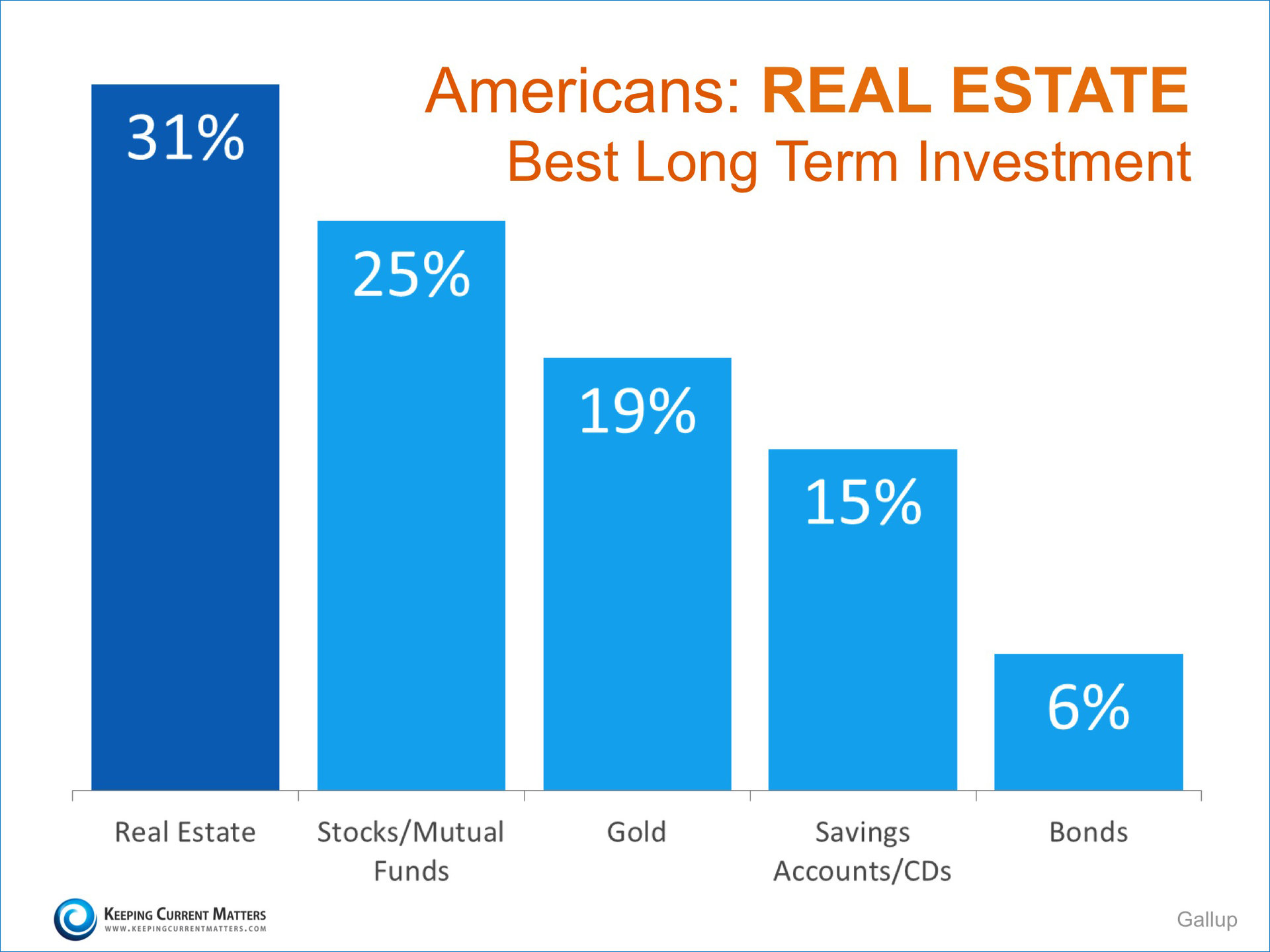
Four recent news articles confirmed that most Americans still see real estate as a great long term investment. The Gallup organization polled the American people and discovered that they believe that real estate is a better long term investment than stocks/mutual funds, gold, savings or bonds:
Americans: Real Estate is Best Long Term Investment | Keeping Current Matters
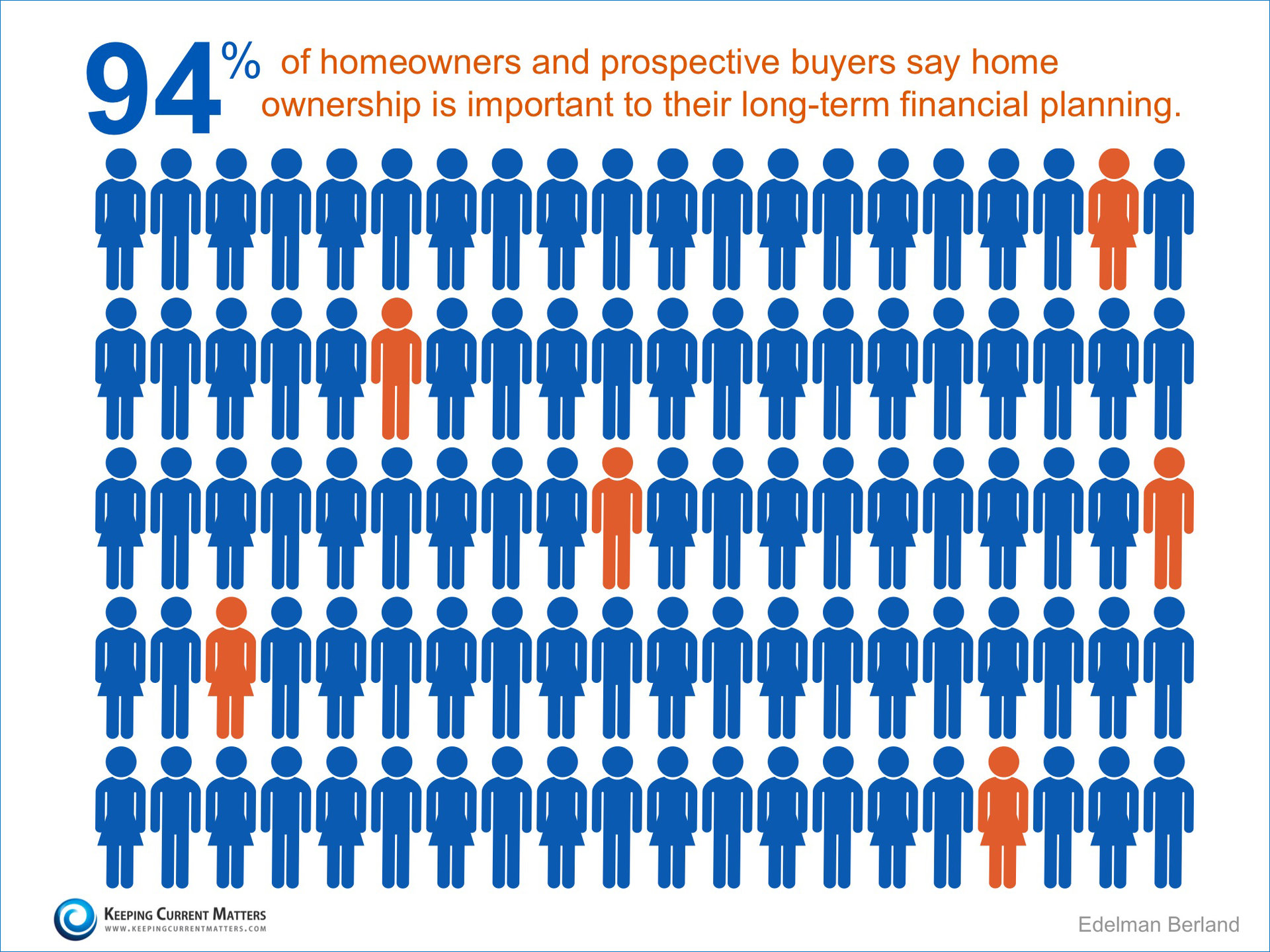
A second survey was done by Edelman Berland which showed that:
Importance of Real Estate to Long-Term Investing | Keeping Current Matters
At the same time, Tim Rood, chairman of the business advisory firm The Collingwood Group, explained that real estate is:
“…one of the last legitimate wealth creation opportunities…The leveraged return if you put down 10 percent on a house, the trajectory of appreciation lately is you’re going to get your money back inside of a year and then after that 5 to 10 percent appreciation rates. It's phenomenal."

Bottom Line

Real estate continues to be a sensational long term investment. If you need help with any of your real estate needs, contact a local real estate professional and discuss the opportunities available in today’s market.

Wednesday, May 6, 2015

Easy Chicken Little: Homeownership Rates Are NOT Crashing

Easy Chicken Little: Homeownership Rates Are NOT Crashing | Keeping Current Matters
The Census recently released their 2015 Q1 Homeownership Statistics, and many began to worry that Americans have taken a step back from the notion of homeownership.
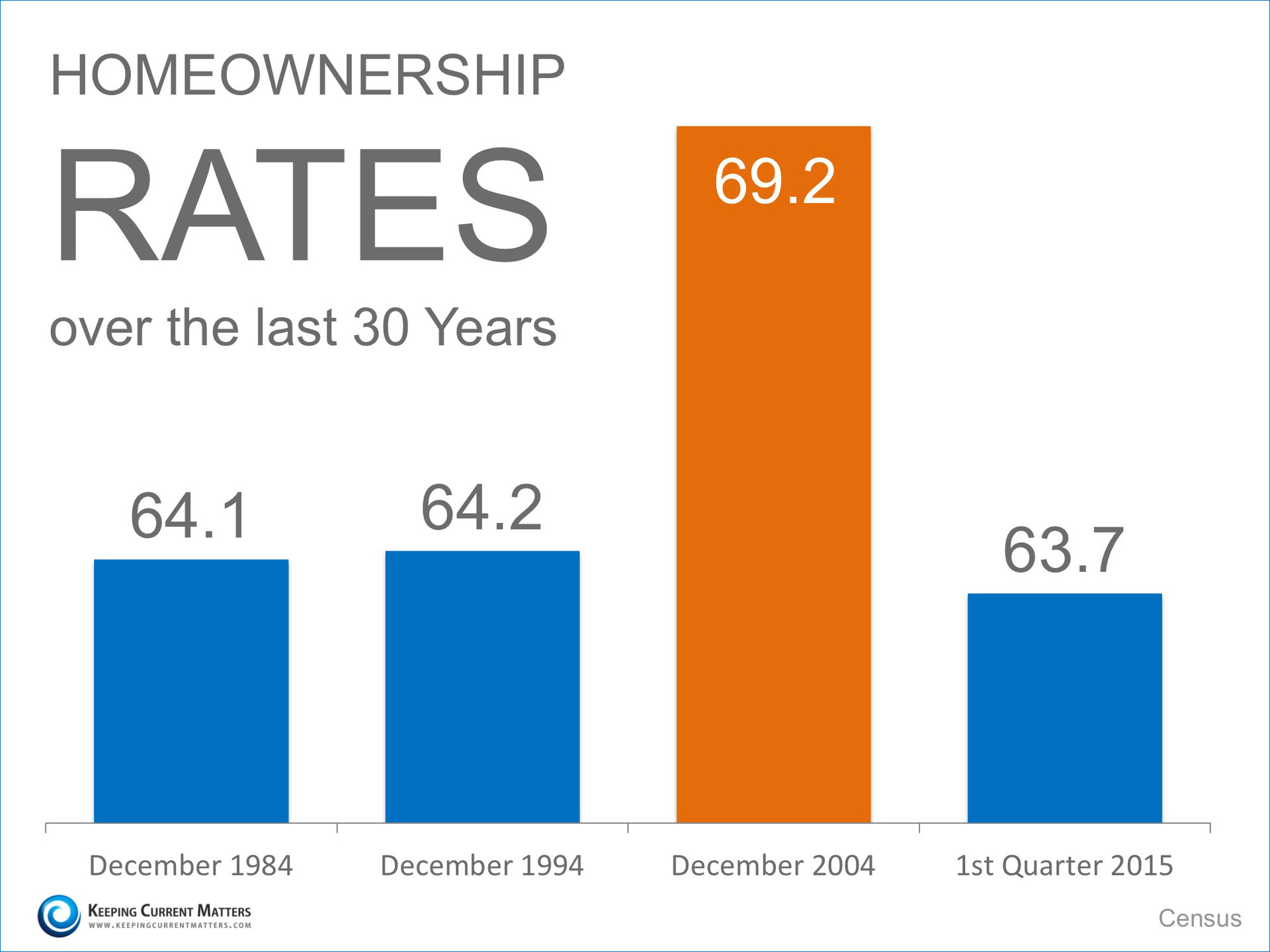
The national homeownership rate (Americans who owned vs. rented their primary residence) increased significantly during the housing boom, reaching its peak of 69.2% in 2004. The Census Bureau just reported the first quarter of 2015 ended with a homeownership rate of 63.7%. Many reported on this and began to question Americans’ belief in the ideal of homeownership as a major part of the American Dream.

Everyone Calm Down…

It is true the homeownership rate has fallen over the last several years. However, if you look at the national rate over the last 30 years (1984-2014), you can see that the current homeownership rate has returned closer to historic norms. The 63.7% rate is less than a percentage point under the rate in 1985 and 1995.
Homeownership Rates Over 30 Years | Keeping Current Matters

What Will the Future Bring?

In a Housing Wire article this week, Ed Stansfield who manages the housing market research at Capital Economics said:
“The homeownership rate fell further at the start of the year to a 22-year low of 63.7. However, with credit conditions now loosening and employment set to continue growing strongly, we suspect this long downward trend may not last for much longer.”
In the same article referenced above, Jonathan Smoke, chief economist for realtor.com, explained why the homeownership rate will probably begin to increase:
“The homeownership rate is likely to bottom this year or next not far from where we are now. By historical patterns, the rate could indeed go up. The simple math behind what it costs to rent versus buy shows that if you can afford the down payment and qualify for a mortgage, it is cheaper to buy rather than rent in 80% of the counties in the US now.”

Bottom Line

With interest rates and prices still below where experts predict, perhaps we should get together and evaluate your ability to purchase a home.

Tuesday, May 5, 2015

Homeowners: We Need to Sell Your House Twice

Homeowners: We Need to Sell Your House Twice | Keeping Current Matters
Every house on the market has to be sold twice; once to a prospective buyer and then to the bank (through the bank’s appraisal). In a housing market where supply is very low and demand is very high, home values increase rapidly. One major challenge in such a market is that bank appraisal. If prices are jumping, it is difficult for appraisers to find adequate comparable sales (similar houses in the neighborhood that closed recently) to defend the price when doing the appraisal for the bank.
With escalating prices, the second sale might be even more difficult than the first. And now, there may be a second issue further complicating the appraisal issue.
The Mortgage News Daily (MND) recently published an article titled Conservative Appraisals Increasingly Mentioned in 2015; Did Something Change?
The article revealed that there was a “flurry” of comments on their website from members expressing concern about…
“…a sudden increase in appraisals reflecting market values well below what had been expected. In some cases the low appraisals had merely required the restructuring of the loan, in others they killed the deal.”
The National Association of Realtors revealed this month that 8% of the contracts that fell through over the last three months were terminated because of appraisal issues.
MND decided to survey their members and ask why this sudden increase in “short” appraisals could be taking place. Here is one result of that survey:
“Almost everyone we spoke to mentioned Fannie Mae's new Collateral Underwriter (CU).”
Collateral Underwriter provides a risk score on individual appraisals which will lead to a ranking of appraisals by risk profile, allowing lenders to identify appraisals with heightened risk of quality issues, overvaluation, and compliance violations. It went on-line on January 26.
Marianne Sullivan, senior vice president of single-family business capability with Fannie Mae believes that CU is not a problem for appraisers. She claimed:
“From an appraiser perspective, one of the lender's responsibilities has always been to review the quality of an appraiser, and they have been using various methods to do that forever. I don’t think appraisers will find this tool to be disruptive.”
However, some think that CU has caused appraisers to become too cautious with their appraised values. One mortgage professional in the MND article explained it this way:
"My personal opinion is that appraisers are being overly conservative in choosing comps because of CU. If CU questions the comps, adjustments, etc., the appraiser would have to do a lot of extra work to justify them. I had anticipated that CU would cause delays because of this extra work, but it seems that appraisers are one step ahead and are being ultra conservative, thus avoiding the extra work in the first place. I haven't spoken to an appraiser about it; this is just my interpretation of what I am seeing."
Ryan Lundquist, a Certified Residential Appraiser in the Sacramento area, agreed:
“One of the unintended consequences of CU may be more conservative appraisals.”

Bottom Line

We must realize that, in today’s housing market, every house must be sold twice and the second sale (to the bank’s appraiser) could be the more difficult one.

Monday, May 4, 2015

4 Reasons To Move-Up This Spring


Spring is in full force; the summer months are right around the corner. If you are debating moving up to your dream home, here are four great reasons to consider buying today instead of waiting.

1.) Buyer Demand is High & Inventory Is Low

Recent numbers show that buyer demand is at the highest peak experienced in years, and inventory for sale is at a 4.6 months supply, which is still markedly lower than the 6.0 months needed for a historically normal market.
The National Association of Realtors, Chief Economist, Lawrence Yun put it this way,"Demand in many markets is far exceeding supply, and properties in March sold at a faster rate than any month since last summer."
Listing your home today can greatly increase exposure to buyers who are out in force and ready to act.

2.) Prices Will Continue to Rise

The Home Price Expectation Survey polls a distinguished panel of over 100 economists, investment strategists, and housing market analysts. Their most recent report projects appreciation in home values over the next five years to be between 11.7% (most pessimistic) and 27.5% (most optimistic).
The bottom in home prices has come and gone. Home values will continue to appreciate for years. Waiting for your current home’s value to increase before selling could price you out of your new home if you aren’t careful.

3.) Mortgage Interest Rates Are Still Near Record Lows

As we reported last week, interest rates have remained below 4% for some time now, and are substantially lower than the rate previous generations paid when getting a mortgage.
The Mortgage Bankers Association, Fannie Mae, Freddie Mac & the National Association of Realtors are in unison projecting that rates will rise over the next 12 months.
An increase in rates will impact YOUR monthly mortgage payment. Even an increase of half a percentage point can put a dent in your family’s net worth. Whether you are moving up or buying your first home, your housing expense will be more a year from now if a mortgage is necessary to purchase your home.

4.) It’s Time to Move On with Your Life

The ‘cost’ of a home is determined by two major components: the price of the home and the current mortgage rate. It appears that both are on the rise. But, what if they weren’t? Would you wait?
Look at the actual reason you are buying and decide whether it is worth waiting. Have you always wanted to live in a certain neighborhood? Would a climate change be just what the doctor ordered? Would you like to be closer to family?

Bottom Line

If the right thing for you and your family is to move up to your dream home this year, buying sooner rather than later could lead to substantial savings.

Tuesday, April 28, 2015

There’s No Place Like Home

There’s No Place Like Home | Keeping Current Matters
Last week, we reported on the financial reasons purchasing a home in today’s market makes sense. The Joint Center for Housing Studies at Harvard University performs a study every year surveying participants for the reasons that American’s feel are most important in regards to homeownership.
The top 4 reasons to own a home cited by respondents were not financial.

1. It means having a good place to raise children & provide them with a good education

From the best neighborhoods to the best school districts, even those without children at the time of purchasing their home, may have this in the back of their mind as a major reason for choosing the location of the home that they purchase.

2. You have a physical structure where you & your family feel safe

It is no surprise that having a place to call home with all that means in comfort and security is the #2 reason.

3. It allows you to have more space for your family

Whether your family is expanding, or an older family member is moving in, having a home that fits your needs is a close third on the list.

4. It gives you control over what you do with your living space, like renovations and updates

Looking to actually try one of those complicated wall treatments that you saw on Pinterest? Want to finally adopt that puppy or kitten you’ve seen online 100 times? Who’s to say that you can’t in your own home?
The 5th reason on the list, is the #1 financial reason to buy a home as seen by respondents:

5. Owning a home is a good way to build up wealth that can be passed along to my family

Either way you are paying a mortgage. Why not lock in your housing expense now with an investment that will build equity that you can borrow against in the future?

Bottom Line

Whether you are a first time homebuyer or a move-up buyer who wants to start a new chapter in their life, now is a great time to reflect on the intangible factors that make a house a home.

Monday, April 27, 2015

Good News for ‘Typical’ Home Buyers

Good News for ‘Typical’ Home Buyers | Keeping Current Matters
In a speech delivered earlier this year, Secretary for HUD Julián Castro, called 2015 “A Year of Housing Opportunity”. A recent report by The National Association of Realtors (NAR) revealed that investment home sales decreased 7.4% in 2014 to an estimated 1.02 million.

What does this mean for the ‘typical’ homebuyer?

Lawrence Yun, NAR’s Chief Economist gave some insight:
“Despite strong rental demand in many markets, investment property sales have declined four consecutive years to their lowest share since 2010 as rising home prices and fewer distressed properties coming onto the market have further reduced the number of bargains available to turn into profitable rentals.”
This is great news for the housing market. If fewer properties are being sold to investors, they are instead being sold to American families who are entering the housing market in droves.

Details of the Report

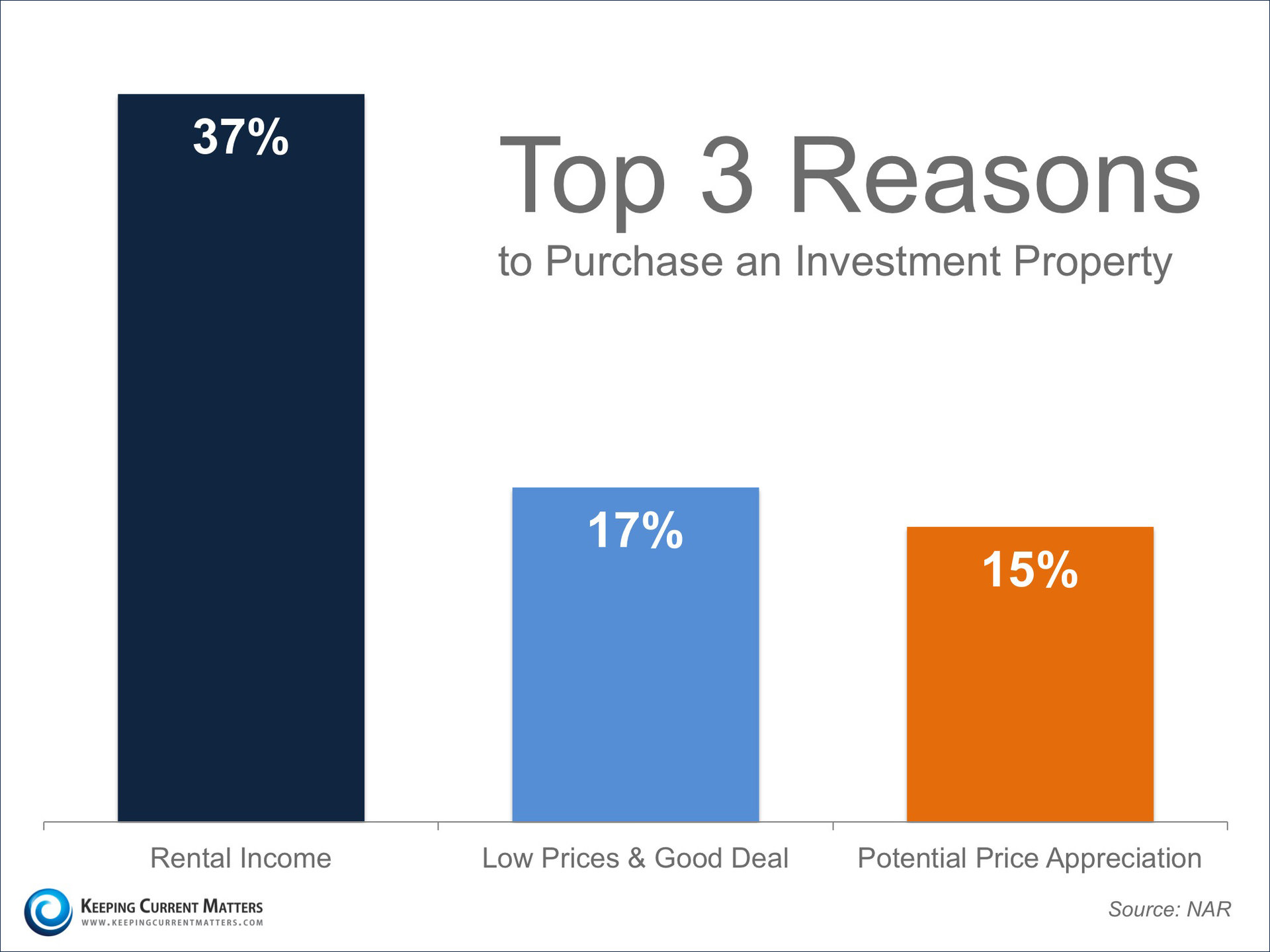
There are many reasons buyers purchase a home as an investment property. Those who made a purchase in 2014 listed the opportunity for rental income as their top reason (37%).
Below is a graph showing the top three reasons:
Top 3 Reasons To Buy | Keeping Current Matters
The median investment-home sales price dropped 3.8% to $125,000, from $130,000 in 2013.
According to Yun, “the decrease in vacation and investment sales prices is likely due to the increase in vacation and investment buyers purchasing condos and townhouses, which contributed to a decline in the median size of 200 square feet for both.”
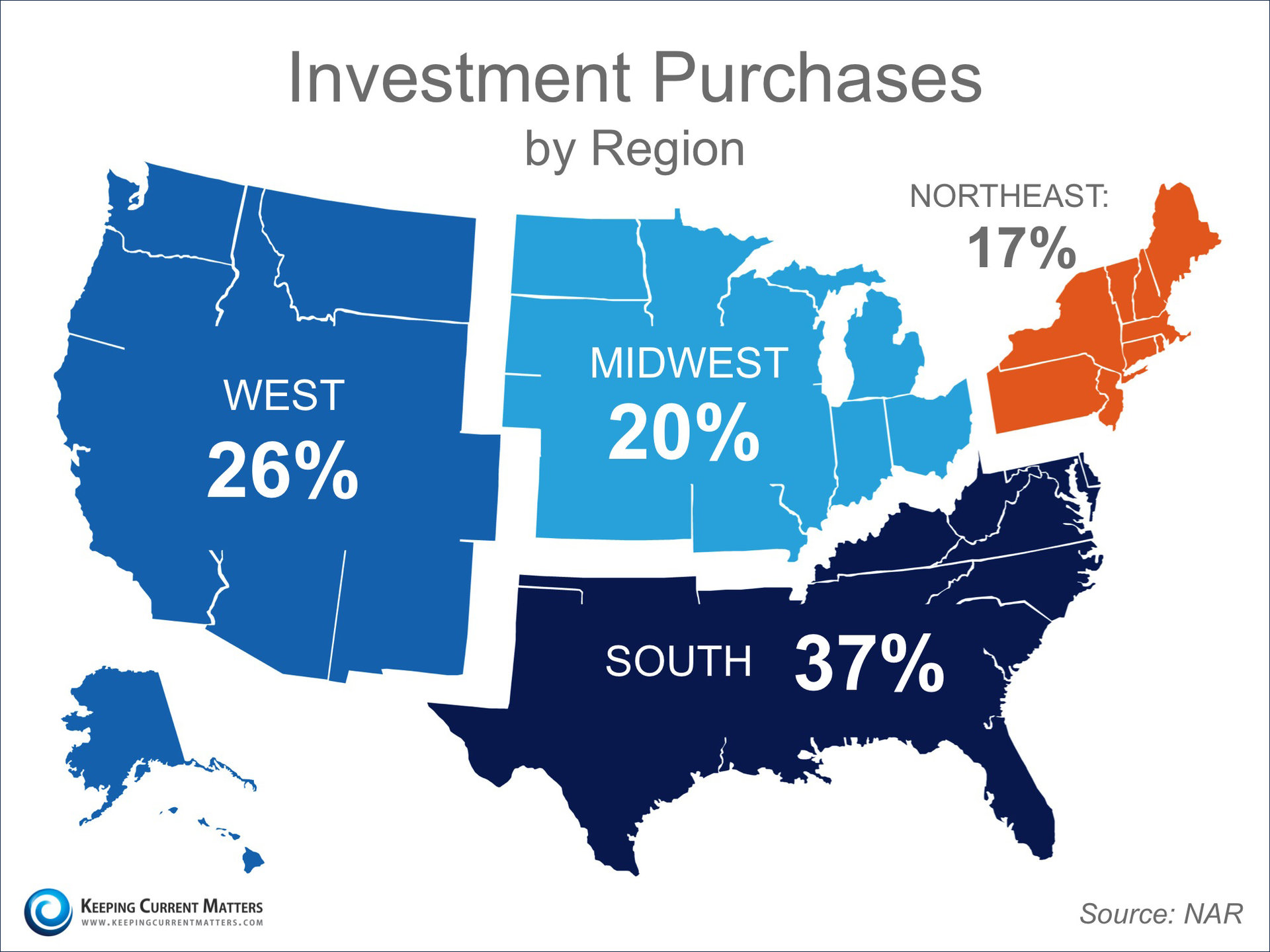
The drop in price can also be attributed to the majority of investment purchases being located in the South (37%) where there are often better deals from a pure pricing standpoint.
Below is a map detailing the investment purchases in 2014 by region.
Investment Purchases by Region | Keeping Current Matters

Bottom Line

The housing market is continuing to recover and thrive. If your plan for 2015 includes buying your first, second or even investment property – contact a local real estate professional to evaluate your ability to enter the market.

Thursday, April 23, 2015

We Need You(r House)!!

We Need You(r House)!! | Keeping Current Matters
Though the real estate market has improved, we still have one item holding it back from a full recovery – a robust supply of homes for sale. Demand has increased dramatically. At the same time, housing inventory is decreasing especially at the lower price points.
The National Association of Realtors (NAR) recently revealed that there is a pent-up seller demand caused by the uncertainty created by the housing crisis of the last decade.

What does that mean to you?

Houses listed today sell quickly. With prices still below peak values of 2007 in many parts of the country and mortgage interest rates at historic lows, this may be the perfect time for your family to make the move to the dream house you always wanted – whether that’s a larger home or that vacation/retirement home you have been looking at.

What does that mean to the economy?

Housing has always been an essential part of the U.S. economy. As we have reportedbefore, real estate not only provides housing for families. It is often the greatest source of wealth and savings for many. The recent increase in real estate sales has led to an increase in real estate prices. This has increased the value of everyone’s' home, whether they are selling or not. This leads to an increase in consumer confidence which in turn leads to an increase in consumer spending. Plus, each home sale automatically puts money into the economy.
NAR compiled data from research conducted by the Bureau of Economic Analysis & Macroeconomic Advisors on the economic impact of a home purchase.
After reviewing the data, they concluded that the total economic impact of a typical home sale in the United States is an astonishing $52,205.
The more homes that sell, the better the economy.

Bottom Line

In order for the U.S. economy to get better, we need to sell more homes. Perhaps, it makes sense for one of those homes to be yours.
If you have considered selling but are still a little nervous, now might be the time to sit down with a real estate professional familiar with your market and see what your options truly are.