208-321-5540

Showing posts with label When to sell your home. Show all posts

Tuesday, May 5, 2015

Homeowners: We Need to Sell Your House Twice

Homeowners: We Need to Sell Your House Twice | Keeping Current Matters
Every house on the market has to be sold twice; once to a prospective buyer and then to the bank (through the bank’s appraisal). In a housing market where supply is very low and demand is very high, home values increase rapidly. One major challenge in such a market is that bank appraisal. If prices are jumping, it is difficult for appraisers to find adequate comparable sales (similar houses in the neighborhood that closed recently) to defend the price when doing the appraisal for the bank.
With escalating prices, the second sale might be even more difficult than the first. And now, there may be a second issue further complicating the appraisal issue.
The Mortgage News Daily (MND) recently published an article titled Conservative Appraisals Increasingly Mentioned in 2015; Did Something Change?
The article revealed that there was a “flurry” of comments on their website from members expressing concern about…
“…a sudden increase in appraisals reflecting market values well below what had been expected. In some cases the low appraisals had merely required the restructuring of the loan, in others they killed the deal.”
The National Association of Realtors revealed this month that 8% of the contracts that fell through over the last three months were terminated because of appraisal issues.
MND decided to survey their members and ask why this sudden increase in “short” appraisals could be taking place. Here is one result of that survey:
“Almost everyone we spoke to mentioned Fannie Mae's new Collateral Underwriter (CU).”
Collateral Underwriter provides a risk score on individual appraisals which will lead to a ranking of appraisals by risk profile, allowing lenders to identify appraisals with heightened risk of quality issues, overvaluation, and compliance violations. It went on-line on January 26.
Marianne Sullivan, senior vice president of single-family business capability with Fannie Mae believes that CU is not a problem for appraisers. She claimed:
“From an appraiser perspective, one of the lender's responsibilities has always been to review the quality of an appraiser, and they have been using various methods to do that forever. I don’t think appraisers will find this tool to be disruptive.”
However, some think that CU has caused appraisers to become too cautious with their appraised values. One mortgage professional in the MND article explained it this way:
"My personal opinion is that appraisers are being overly conservative in choosing comps because of CU. If CU questions the comps, adjustments, etc., the appraiser would have to do a lot of extra work to justify them. I had anticipated that CU would cause delays because of this extra work, but it seems that appraisers are one step ahead and are being ultra conservative, thus avoiding the extra work in the first place. I haven't spoken to an appraiser about it; this is just my interpretation of what I am seeing."
Ryan Lundquist, a Certified Residential Appraiser in the Sacramento area, agreed:
“One of the unintended consequences of CU may be more conservative appraisals.”

Bottom Line

We must realize that, in today’s housing market, every house must be sold twice and the second sale (to the bank’s appraiser) could be the more difficult one.

Thursday, April 23, 2015

We Need You(r House)!!

We Need You(r House)!! | Keeping Current Matters
Though the real estate market has improved, we still have one item holding it back from a full recovery – a robust supply of homes for sale. Demand has increased dramatically. At the same time, housing inventory is decreasing especially at the lower price points.
The National Association of Realtors (NAR) recently revealed that there is a pent-up seller demand caused by the uncertainty created by the housing crisis of the last decade.

What does that mean to you?

Houses listed today sell quickly. With prices still below peak values of 2007 in many parts of the country and mortgage interest rates at historic lows, this may be the perfect time for your family to make the move to the dream house you always wanted – whether that’s a larger home or that vacation/retirement home you have been looking at.

What does that mean to the economy?

Housing has always been an essential part of the U.S. economy. As we have reportedbefore, real estate not only provides housing for families. It is often the greatest source of wealth and savings for many. The recent increase in real estate sales has led to an increase in real estate prices. This has increased the value of everyone’s' home, whether they are selling or not. This leads to an increase in consumer confidence which in turn leads to an increase in consumer spending. Plus, each home sale automatically puts money into the economy.
NAR compiled data from research conducted by the Bureau of Economic Analysis & Macroeconomic Advisors on the economic impact of a home purchase.
After reviewing the data, they concluded that the total economic impact of a typical home sale in the United States is an astonishing $52,205.
The more homes that sell, the better the economy.

Bottom Line

In order for the U.S. economy to get better, we need to sell more homes. Perhaps, it makes sense for one of those homes to be yours.
If you have considered selling but are still a little nervous, now might be the time to sit down with a real estate professional familiar with your market and see what your options truly are.

Friday, April 17, 2015

Does Homeownership Make Sense Financially?


Does Homeownership Make Financial Sense? | Keeping Current Matters
Everyone knows the social advantages of home ownership. However, some question the financial benefits of owning a home. Three recent studies shed some light on the issue.
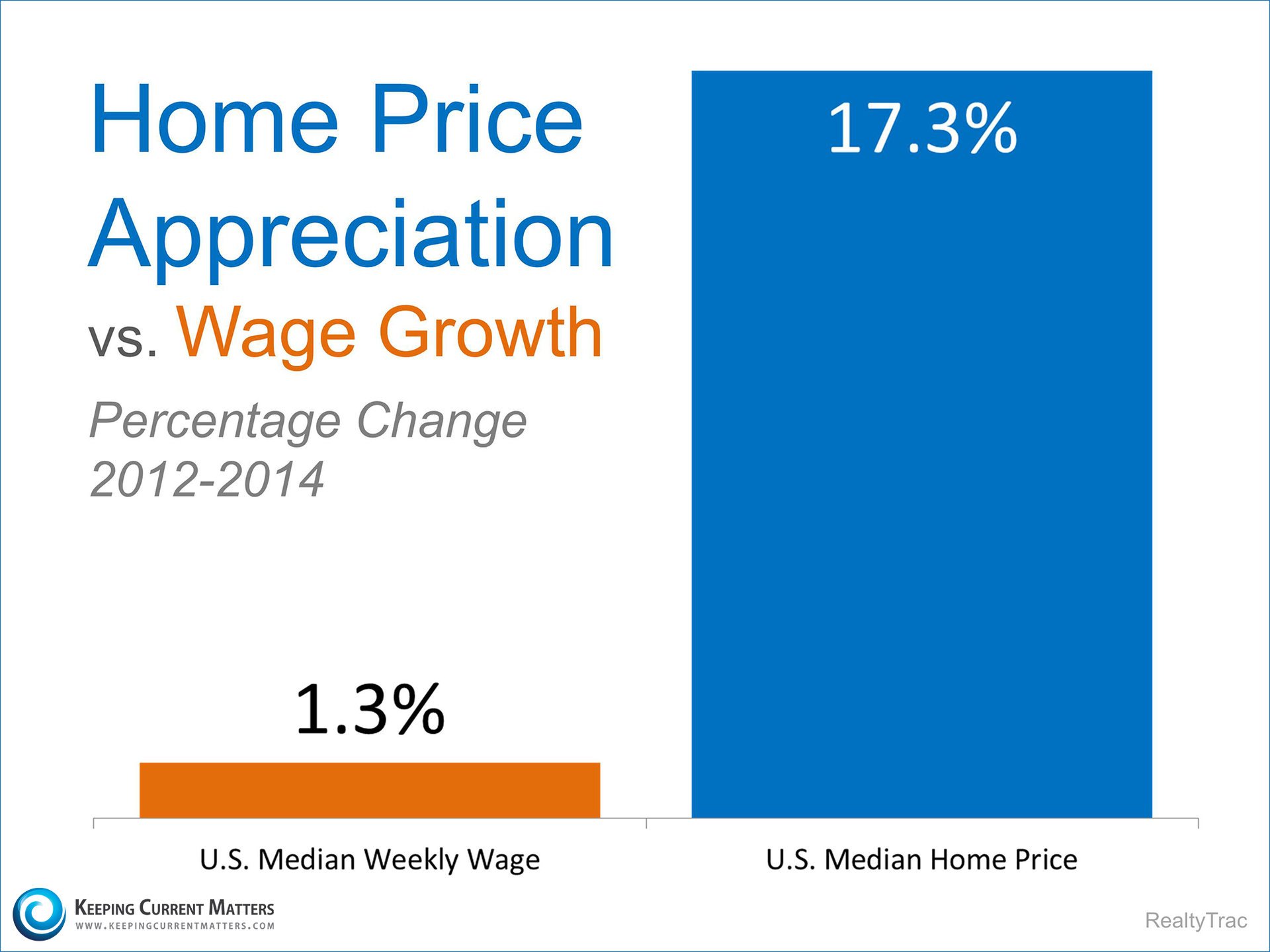
RealtyTrac recently released a report comparing home price appreciation to wage growth over the last two years. The study revealed that home price appreciation has outpaced wage growth in 76% of U.S. housing markets during that time period. By how much? Here is a graph showing their findings:
Home Prices vs. Wages | Keeping Current Matters
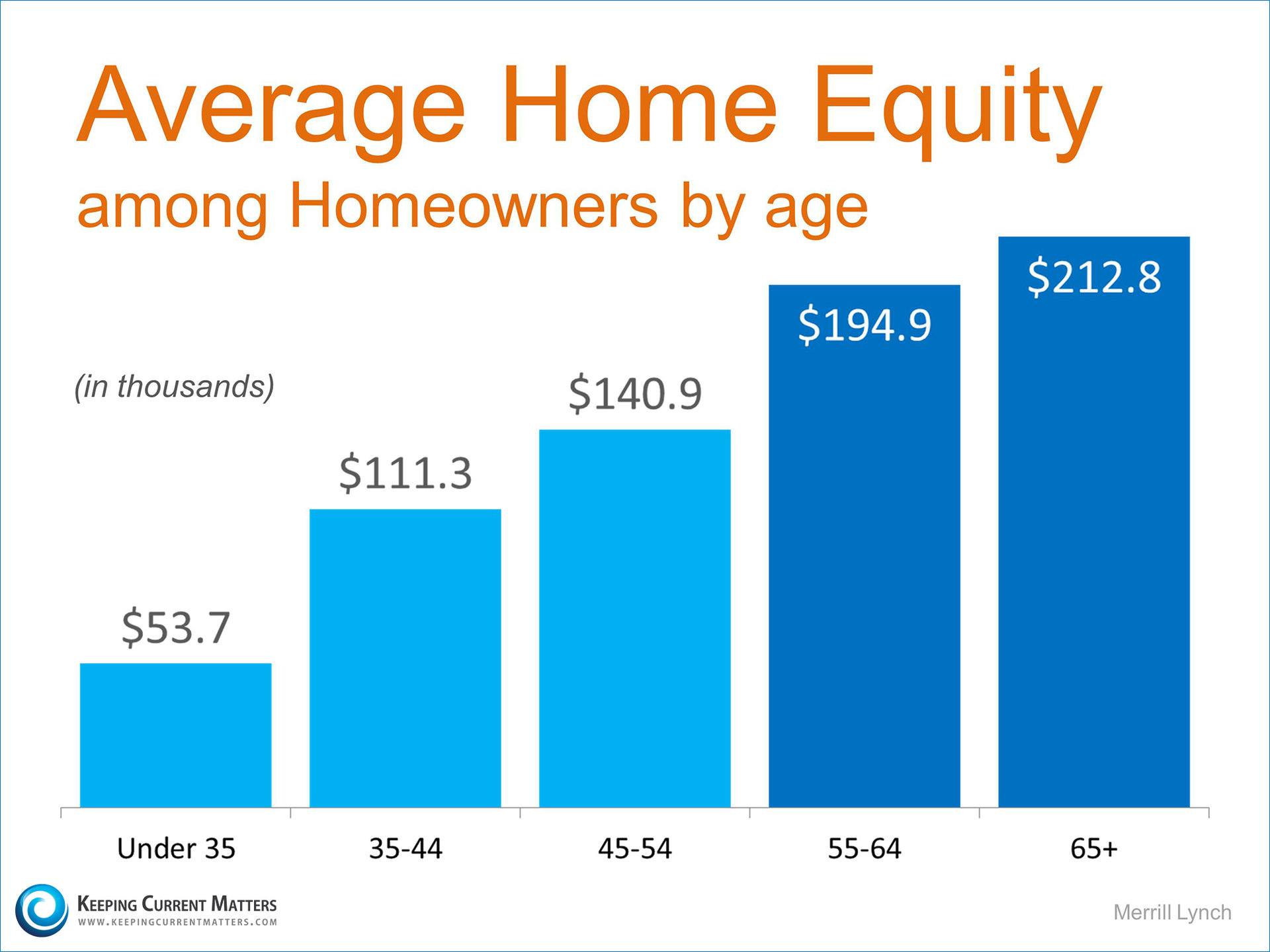
And we all know the importance of home appreciation in determining the net wealth of most American families. Merrill Lynch just issued a report covering the issue. Their findings are shown here:
Average Home Equity | Keeping Current Matters
It obviously makes financial sense to be a homeowner.

But, does it make sense to buy now?

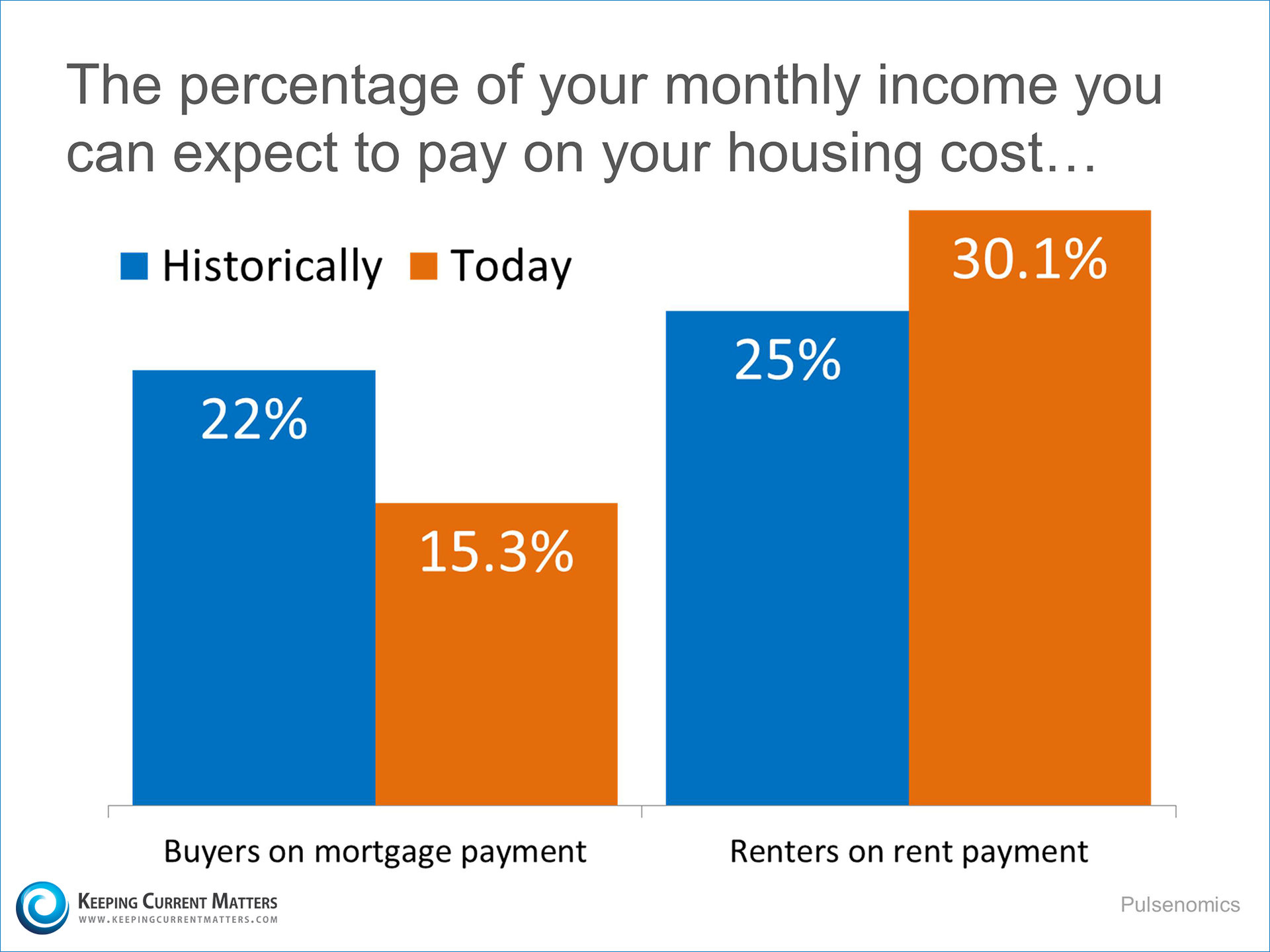
The survey company Pulsenomics just issued their findings on the cost of owning versus the cost of renting. They compared historical averages to the cost you can expect to pay today.
Buying vs. Renting | Keeping Current Matters

The cost of buying is far below historical averages. Renting is another story.

Later today, we will be hosting a webinar entitled 4 Secrets to Getting Buyers & Sellers Off the Fence which will go into more depth about the opportunity available to buyers, along with ways to help potential sellers realize that now is the time to list their home.
You can reserve your seat here.

Thursday, August 7, 2014

Getting the Most Value from your home.

[caption id="attachment_1023" align="aligncenter" width="800"]Barb.Dopp.5-things-to-sell-your-home The Five things you Must know!![/caption]