208-321-5540

Showing posts with label buying a first home. Show all posts

Thursday, May 7, 2015

Homeownership Still a Great Investment

Homeownership Still a Great Investment | Keeping Current Matters
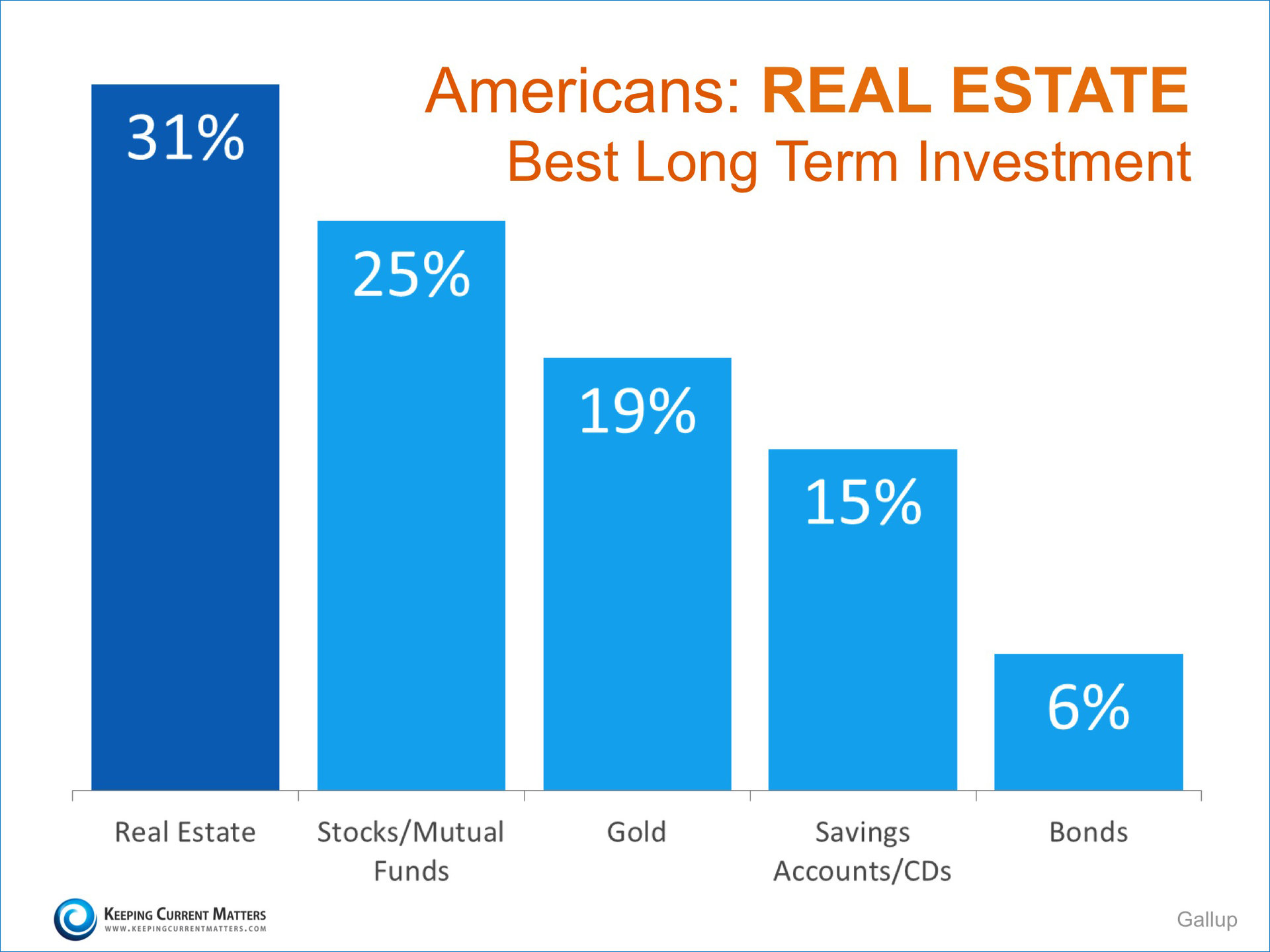
Four recent news articles confirmed that most Americans still see real estate as a great long term investment. The Gallup organization polled the American people and discovered that they believe that real estate is a better long term investment than stocks/mutual funds, gold, savings or bonds:
Americans: Real Estate is Best Long Term Investment | Keeping Current Matters
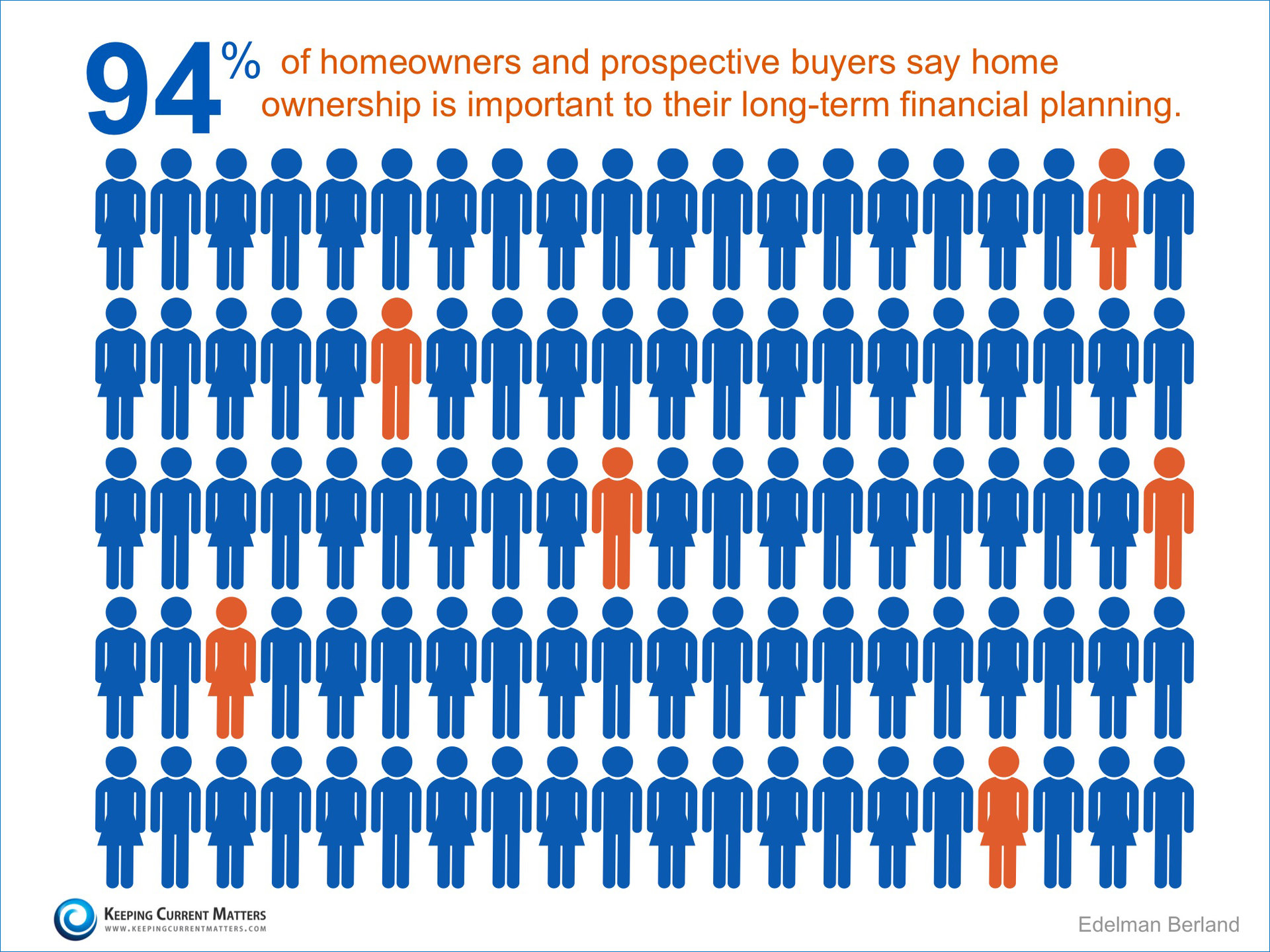
A second survey was done by Edelman Berland which showed that:
Importance of Real Estate to Long-Term Investing | Keeping Current Matters
At the same time, Tim Rood, chairman of the business advisory firm The Collingwood Group, explained that real estate is:
“…one of the last legitimate wealth creation opportunities…The leveraged return if you put down 10 percent on a house, the trajectory of appreciation lately is you’re going to get your money back inside of a year and then after that 5 to 10 percent appreciation rates. It's phenomenal."

Bottom Line

Real estate continues to be a sensational long term investment. If you need help with any of your real estate needs, contact a local real estate professional and discuss the opportunities available in today’s market.

Monday, April 27, 2015

Good News for ‘Typical’ Home Buyers

Good News for ‘Typical’ Home Buyers | Keeping Current Matters
In a speech delivered earlier this year, Secretary for HUD Julián Castro, called 2015 “A Year of Housing Opportunity”. A recent report by The National Association of Realtors (NAR) revealed that investment home sales decreased 7.4% in 2014 to an estimated 1.02 million.

What does this mean for the ‘typical’ homebuyer?

Lawrence Yun, NAR’s Chief Economist gave some insight:
“Despite strong rental demand in many markets, investment property sales have declined four consecutive years to their lowest share since 2010 as rising home prices and fewer distressed properties coming onto the market have further reduced the number of bargains available to turn into profitable rentals.”
This is great news for the housing market. If fewer properties are being sold to investors, they are instead being sold to American families who are entering the housing market in droves.

Details of the Report

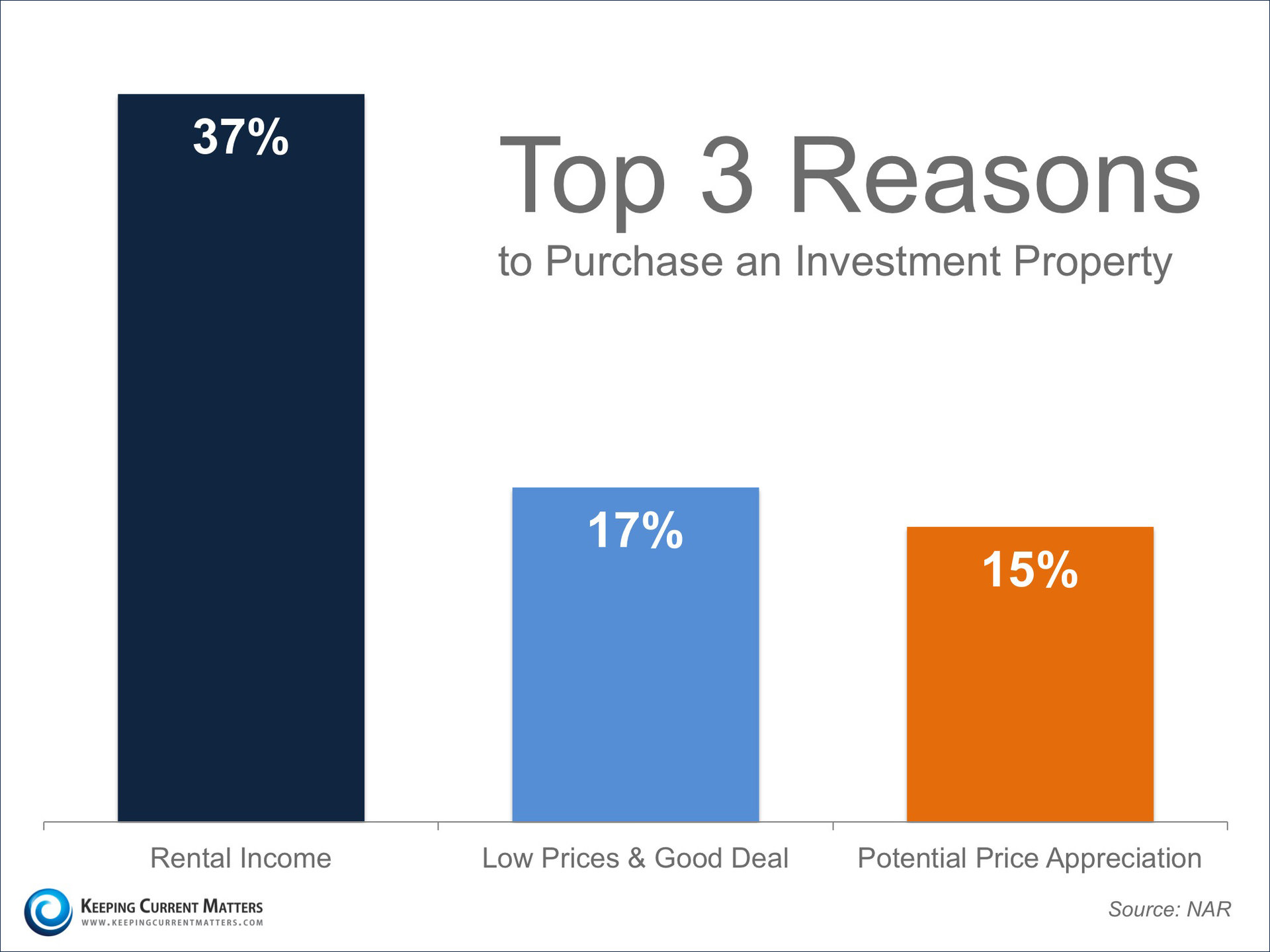
There are many reasons buyers purchase a home as an investment property. Those who made a purchase in 2014 listed the opportunity for rental income as their top reason (37%).
Below is a graph showing the top three reasons:
Top 3 Reasons To Buy | Keeping Current Matters
The median investment-home sales price dropped 3.8% to $125,000, from $130,000 in 2013.
According to Yun, “the decrease in vacation and investment sales prices is likely due to the increase in vacation and investment buyers purchasing condos and townhouses, which contributed to a decline in the median size of 200 square feet for both.”
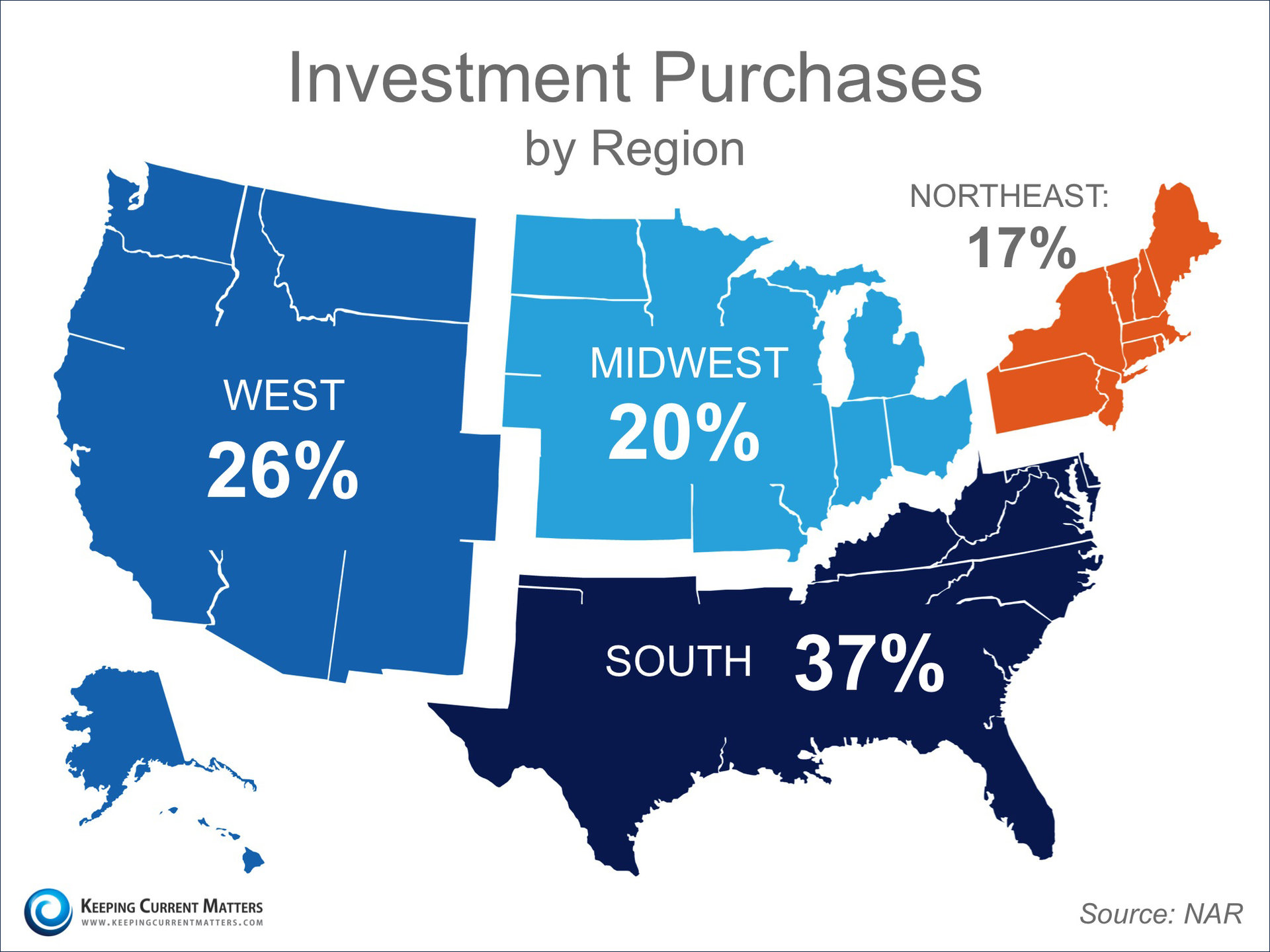
The drop in price can also be attributed to the majority of investment purchases being located in the South (37%) where there are often better deals from a pure pricing standpoint.
Below is a map detailing the investment purchases in 2014 by region.
Investment Purchases by Region | Keeping Current Matters

Bottom Line

The housing market is continuing to recover and thrive. If your plan for 2015 includes buying your first, second or even investment property – contact a local real estate professional to evaluate your ability to enter the market.

Monday, April 6, 2015

New Study: Homeownership Creates Family Wealth

New Study: Homeownership Creates Family Wealth | Keeping Current Matters

Matthew Rognlie, from the Department of Economics at MIT, recently released a paper:Deciphering the Fall and Rise in the Net Capital Share. One of the major findings of the report is that homeownership is and has been for the last fifty years a major component to family wealth.
An article on the study in The Economist notes one of the findings of the study:
“The return on non-housing wealth, in fact, has been remarkably stable since 1970. Instead, surging house prices are almost entirely responsible for growing returns on capital.”
This came as no surprise to us as the Federal Reserve previously reported that the net worth of families that own their own home is 36 times greater than that of families that rent.

Bottom Line

HousingWire’s Senior Financial Reporter, Trey Garrison, summed it up well in hisreporting on Rognlie’s study:
“Homeownership has consistently created generational wealth more reliably, and more ‘democratically’, than any other asset class. And it does so in a manner entirely ancillary to its primary purpose of giving you a place to lay your head and keep your stuff.”

Monday, March 9, 2015

Is the Housing Market Back? Ask Lowes & Home Depot!


Is the Housing Market Back? Ask Lowes & Home Depot! | Keeping Current Matters

A recent Bloomberg Business article reports that both Lowes & Home Depot experienced fourth quarter profits that beat revenue projections by the most in six quarters. So what does that mean to the housing market?

Consumer Confidence


Lowe’s Chief Executive Officer Robert Niblock said,
“Consumers are feeling better about their jobs, their wages and certainly feeling better about the value of their home, they are re-engaging in projects that they have put off.”

Sales to professional contractors have increased significantly as well, and were a driving factor in the quarter. Home Depot’s Chief Financial Officer Carol Tome calls this a “sign of health. If they are putting more items in their basket, it means they have work coming at them.”

Home Values Rising


In a quarterly consumer survey conducted by Lowe’s since 2007, the percentage of respondents who said that the value of their home is rising increased to its highest value ever, at 50%.

Whether Americans are finally adding that man-cave they’ve always wanted, or renovating a master suite, an increased confidence in the value of one’s home often sparks homeowners to invest in big-ticket projects.

The National Association of Realtors (NAR) reports that the median price of an existing home (for all housing types) rose year-over-year for the 35th consecutive month.

Not all who are renovating are planning on staying in their home. The Demand Institutereports that “nearly half of American households plan to move at some point in the future.”

For those who are planning on listing their home this spring, spending the time and money needed to update that 1950’s bathroom or kitchen can fetch higher prices in today’s market.

Bottom Line


Meeting with a local real estate professional can give you insight into the small (or big) improvements your home could use to draw the highest price and return on investment this spring.

Thursday, February 12, 2015

Either Way, You’re Paying a Mortgage


Either Way, You're Paying A Mortgage | Keeping Current Matters

There are some people that have not purchased a home because they are uncomfortable taking on the obligation of a mortgage. Everyone should realize that, unless you are living with your parents rent free, you are paying a mortgage - either your mortgage or your landlord’s.

As a paper from the Joint Center for Housing Studies at Harvard University explains:
“Households must consume housing whether they own or rent. Not even accounting for more favorable tax treatment of owning, homeowners pay debt service to pay down their own principal while households that rent pay down the principal of a landlord plus a rate of return. That’s yet another reason owning often does—as Americans intuit—end up making more financial sense than renting.”

Also, if you purchase with a 30-year fixed rate mortgage, your ‘housing expense’ is locked in over the thirty years for the most part. If you rent, the one guarantee you will have is that your rent will increase over that same thirty year time period.

As an owner, the mortgage payment is a ‘forced savings’ which will allow you to have equity in your home you can tap into later in your life. As a renter, you guarantee the landlord is the person with that equity.

Bottom Line


Whether you are looking for a primary residence for the first time or are considering a vacation home on the shore, owning might make more sense than renting since home values and interest rates are still lower than projected.

Thursday, February 5, 2015

The Difference Between A Home’s Cost vs. Price


The Difference Between A Home’s Cost vs. Price | Keeping Current Matters

As a seller, you will be most concerned about ‘short term price’ – where home values are headed over the next six months. As either a first time or repeat buyer, you must not be concerned only about price but also about the ‘long term cost’ of the home.

Let us explain.


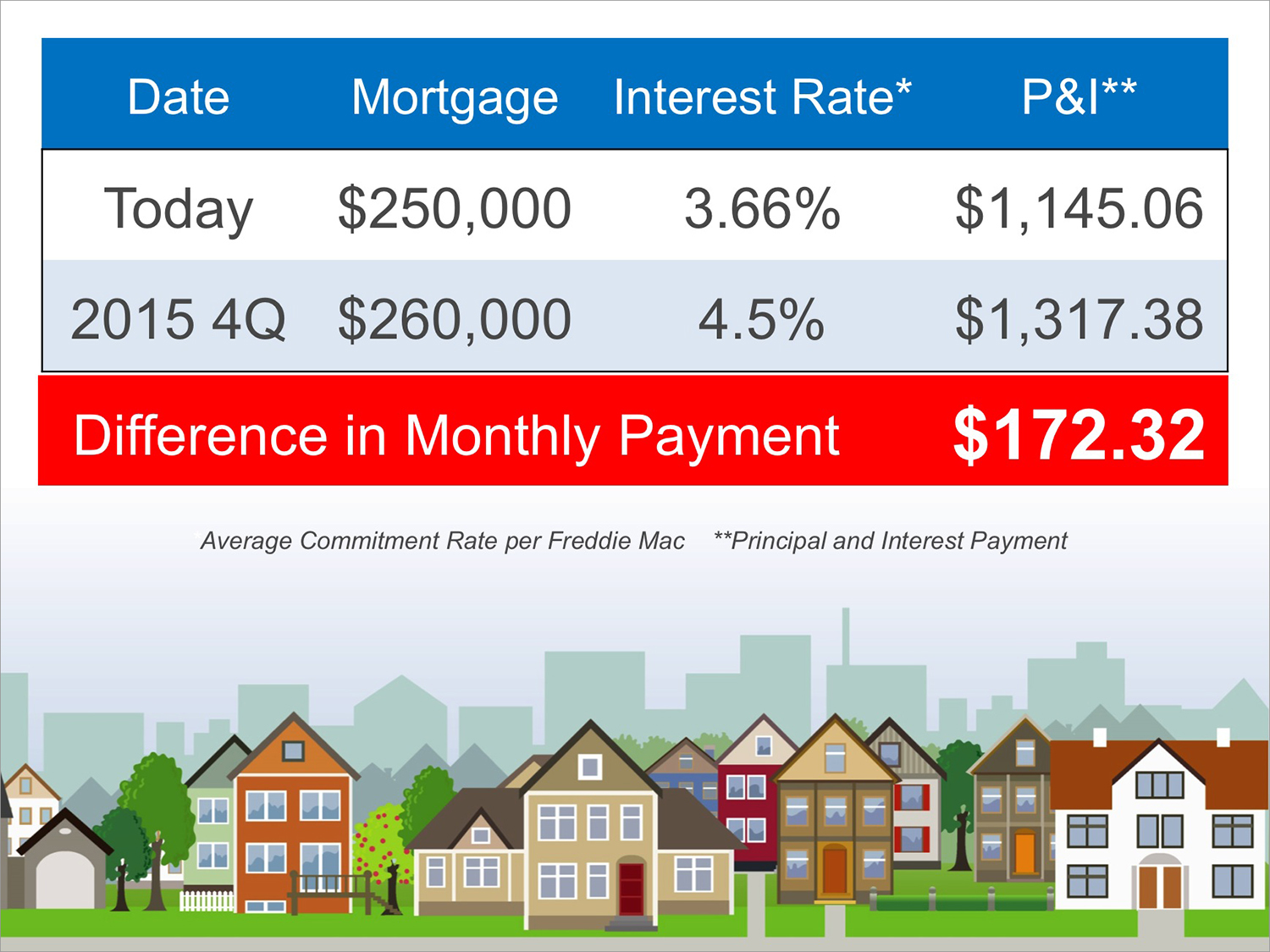
There are many factors that influence the ‘cost’ of a home. Two of the major ones are the home’s appreciation over time, and the interest rate at which a buyer can borrow the funds necessary to purchase their home. The rate at which these two factors can change is often referred to as “The Cost of Waiting”.

What will happen in 2015?


A nationwide panel of over one hundred economists, real estate experts and investment & market strategists project that home values will appreciate by almost 4% by the end of 2015.

Additionally, Freddie Mac’s most recent Economic Commentary & Projections Tablepredicts that the 30-year fixed mortgage rate will appreciate to 4.5% by the end of 2015.

What Does This Mean to a Buyer?


Here is a simple demonstration of what impact these projected changes would have on the mortgage payment of a home selling for approximately $250,000 today:

Cost of Waiting | Keeping Current Matters


Monday, January 26, 2015

5 Reasons to Hire a Real Estate Professional

5 Reasons to Hire a Real Estate Professional | Keeping Current Matters

Whether you are buying or selling a home, it can be quite an adventurous journey. You need an experienced Real Estate Professional to lead you to your ultimate goal. In this world of instant gratification and internet searches, many sellers think that they can For Sale by Owner or FSBO.

The 5 Reasons You NEED a Real Estate Professional in your corner haven’t changed, but have rather been strengthened due to the projections of higher mortgage interest rates & home prices as the market continues to recover. 

1. What do you do with all this paperwork?


Each state has different regulations regarding the contracts required for a successful sale, and these regulations are constantly changing. A true Real Estate Professional is an expert in their market and can guide you through the stacks of paperwork necessary to make your dream a reality.

2. Ok, so you found your dream house, now what?


According to the Orlando Regional REALTOR Association, there are over 230 possible actions that need to take place during every successful real estate transaction. Don’t you want someone who has been there before, who knows what these actions are to make sure that you acquire your dream?

3. Are you a good negotiator?


So maybe you’re not convinced that you need an agent to sell your home. However, after looking at the list of parties that you need to be prepared to negotiate with, you’ll realize the value in selecting a Real Estate Professional. From the buyer (who wants the best deal possible), to the home inspection companies, to the appraiser, there are at least 11 different people that you will have to be knowledgeable with and answer to, during the process.

4. What is the home you’re buying/selling really worth?


It is important for your home to be priced correctly from the start to attract the right buyers and shorten the time that it’s on the market. You need someone who is not emotionally connected to your home to give you the truth as to your home’s value. According to theNational Association of REALTORS“the typical FSBO home sold for $208,000 compared to $235,000 among agent-assisted home sales.”

Get the most out of your transaction by hiring a professional.  

5. Do you know what’s really going on in the market?


There is so much information out there on the news and the internet about home sales, prices, mortgage rates; how do you know what’s going on specifically in your area? Who do you turn to in order to competitively price your home correctly at the beginning of the selling process? How do you know what to offer on your dream home without paying too much, or offending the seller with a low-ball offer?

Dave Ramsey, the financial guru advises:
“When getting help with money, whether it’s insurance, real estate or investments, you should always look for someone with the heart of a teacher, not the heart of a salesman.”

Hiring an agent who has their finger on the pulse of the market will make your buying/selling experience an educated one. You need someone who is going to tell you the truth, not just what they think you want to hear.

Bottom Line:


You wouldn’t replace the engine in your car without a trusted mechanic. Why would you make one of your most important financial decisions of your life without hiring a Real Estate Professional?

Wednesday, January 21, 2015

Attaining the American Dream: 5 Financial Reasons to Buy


Attaining The American Dream: 5 Financial Reasons To Buy | Keeping Current Matters

Heading into 2015 many people have their sights set on buying a home. The personal reasons differ for each buyer, with many basic similarities. Eric Belsky, the Managing Director of the Joint Center of Housing Studies at Harvard University expanded on thetop 5 financial benefits of homeownership his paper - The Dream Lives On: the Future of Homeownership in America.

Here are the five reasons, each followed by an excerpt from the study:

1.) Housing is typically the one leveraged investment available.


“Few households are interested in borrowing money to buy stocks and bonds and few lenders are willing to lend them the money. As a result, homeownership allows households to amplify any appreciation on the value of their homes by a leverage factor. Even a hefty 20 percent down payment results in a leverage factor of five so that every percentage point rise in the value of the home is a 5 percent return on their equity. With many buyers putting 10 percent or less down, their leverage factor is 10 or more.”

2.) You're paying for housing whether you own or rent.


“Homeowners pay debt service to pay down their own principal while households that rent pay down the principal of a landlord.”

3.) Owning is usually a form of “forced savings”.


“Since many people have trouble saving and have to make a housing payment one way or the other, owning a home can overcome people’s tendency to defer savings to another day.”

4.) There are substantial tax benefits to owning.


“Homeowners are able to deduct mortgage interest and property taxes from income...On top of all this, capital gains up to $250,000 are excluded from income for single filers and up to $500,000 for married couples if they sell their homes for a gain.”

5.) Owning is a hedge against inflation.


“Housing costs and rents have tended over most time periods to go up at or higher than the rate of inflation, making owning an attractive proposition.”

Bottom Line


We realize that homeownership makes sense for many Americans for an assortment of social and family reasons. It also makes sense financially.

Tuesday, January 20, 2015

3 Questions to Ask Before Buying a Home


3 Questions to Ask Before Buying a Home | Keeping Current Matters

If you are thinking about purchasing a home right now, you are surely getting a lot of advice. Though your friends and family have your best interests at heart, they may not be fully aware of your needs and what is currently happening in real estate. Let’s look at whether or not now is actually a good time for you to buy a home.

There are three questions you should ask before purchasing in today’s market:

1. Why am I buying a home in the first place?


This truly is the most important question to answer. Forget the finances for a minute. Why did you even begin to consider purchasing a home? For most, the reason has nothing to do with finances. A study by the Joint Center for Housing Studies at Harvard University reveals that the four major reasons people buy a home have nothing to do with money:

  • A good place to raise children and for them to get a good education

  • A place where you and your family feel safe

  • More space for you and your family

  • Control of the space


What non-financial benefits will you and your family derive from owning a home? The answer to that question should be the biggest reason you decide to purchase or not.

2. Where are home values headed?


When looking at future housing values, Home Price Expectation Survey provides a fair assessment. Every quarter, Pulsenomics surveys a nationwide panel of over one hundred economists, real estate experts and investment & market strategists about where prices are headed over the next five years. They then average the projections of all 100+ experts into a single number.

Here is what the experts projected in the latest survey:

  • Home values will appreciate by 4% in 2015.

  • The cumulative appreciation will be 23.5% by 2019.

  • Even the experts making up the most bearish quartile of the survey still are projecting a cumulative appreciation of over 15.1% by 2019.


3. Where are mortgage interest rates headed?


A buyer must be concerned about more than just prices. The ‘long term cost’ of a home can be dramatically impacted by an increase in mortgage rates.

The Mortgage Bankers Association (MBA), the National Association of RealtorsFannie Mae and Freddie Mac have all projected that mortgage interest rates will increase by approximately one full percentage over the next twelve months.

Bottom Line


Only you and your family can know for certain the right time to purchase a home. Answering these questions will help you make that decision.

Thursday, January 15, 2015

Boise City-Nampa, ID MSA Makes ‘Best Buy Cities’ List Second Year in a Row

BizNews_Boise.105425

Forbes and Local Market Monitor teamed up once again to ascertain their ‘Best Buy Cities’ list for 2015. Data for 105 of the largest metropolitan statistical areas (MSAs), each with a minimum population of 550,000, was examined to come up with their top 20 cities to invest in 2015. The MSAs who made the list exhibited strong population and jobs growth as well as a healthy relationship between the average income and home prices.

Making the list for a second year in a row was the Boise City-Nampa, ID MSA at number 8, up from 2014 when the MSA was ranked number 10. According to Local Market Monitor’s data, the MSA has a population of 650,288 with a 3.5% unemployment rate. The average home price is $183,649 and is expected to grow by 9% in the coming year. Read more athttp://onforb.es/1z6XdZA.